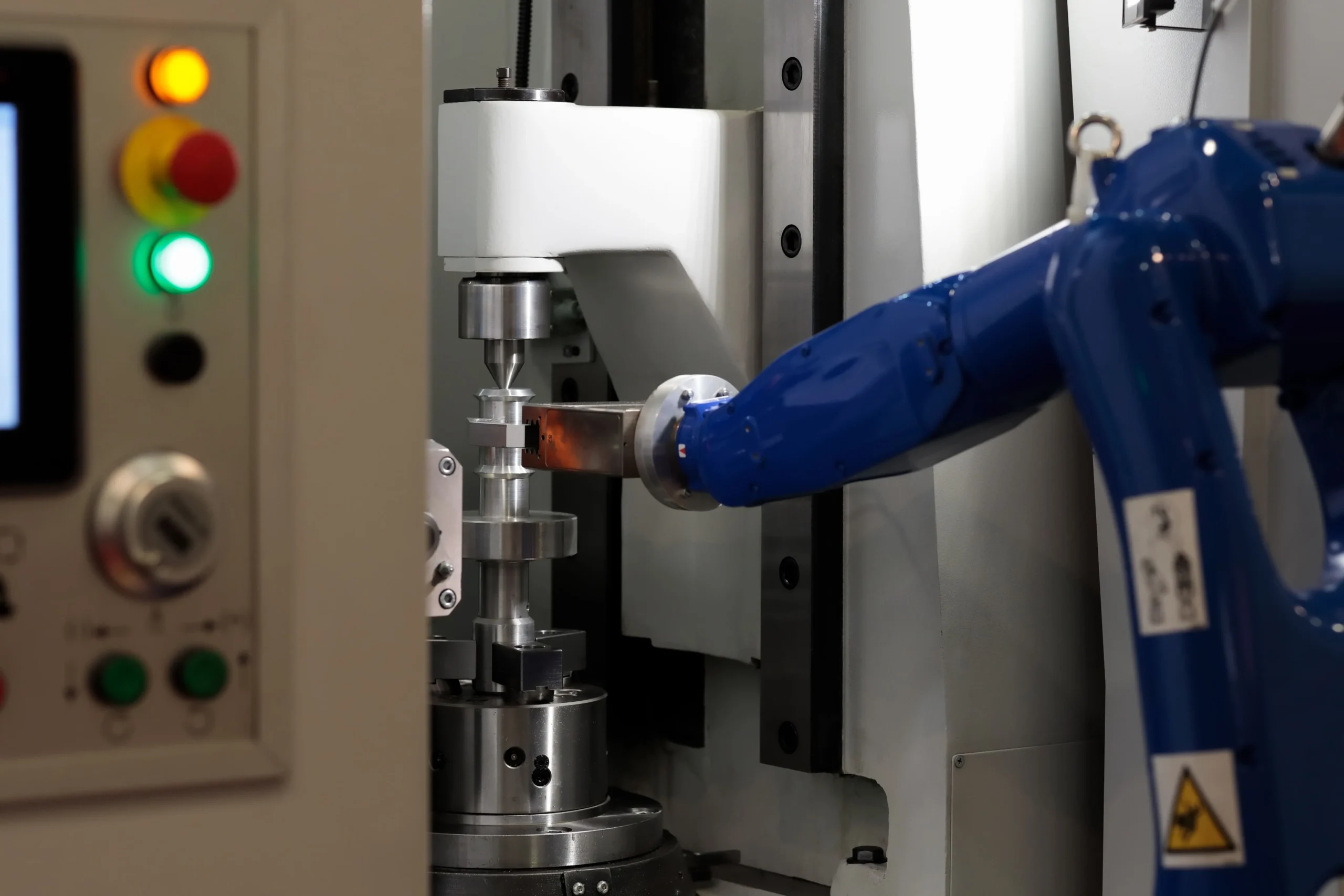



For decades, industrial automation has been in the hands of a few: highly specialized engineers, PLC programmers, and system integrators. Today, however, a new technological wave is democratizing how plants are designed and managed: it is called low-code/no-code and represents a silent revolution that promises greater agility, more autonomy, and less dependence on scarce and expensive skills in the labor market.
What is low-code/no-code in automation?
In the IT world, low-code and no-code platforms are already well established. They allow software and applications to be developed by dragging visual blocks, with little or no coding required. In industrial contexts, the principle is the same: simplifying and accelerating the programming of systems, HMI (human-machine interfaces), process logic, and even robots. With these tools, technicians with mechanical or electrical backgrounds can configure automation sequences, create dashboards, or modify production flows without mastering complex languages such as ladder, ST, or SCL.
Where is it applied?
Low-code and no-code platforms are finding applications in various areas of industrial automation, simplifying tasks that previously required expert programmers.
One of the most widespread areas is PLC and controller configuration, where visual tools allow even complex logic to be defined with a few clicks.
Another fast-growing field is human-machine interface (HMI) design: intuitive graphic editors enable the creation of dashboards, control panels, and customized visualizations even by non-software specialists.
These platforms also play a key role in integrating OT (Operational Technology) devices—such as sensors, actuators, and machines—with IT and cloud systems, making data exchange between factory floors and management systems much easier.
Low-code is also increasingly used in testing, calibration, and quality control, where standard operations can be automated to reduce errors and improve repeatability.
Collaborative robotics and automated handling systems are also benefiting from this approach: programming a cobot or configuring an AGV path can now be done through simplified interfaces designed for use directly on the production line.
Concrete examples
The application of the low-code/no-code paradigm in industry is already a reality in many factories. Production managers can independently create customized dashboards for monitoring production or set real-time alerts without involving IT departments.
In other cases, HMI interfaces are built through drag-and-drop tools without writing HTML or JavaScript, allowing rapid adaptation of process visualization.
Modular, app-based systems are also emerging, where technicians configure devices by downloading and visually connecting software modules, similar to smartphone apps, but applied to production lines.
Key benefits
These technologies significantly reduce deployment and commissioning times—sometimes by up to 50%. They also enable smaller companies without dedicated programmers to adopt automation.
Another key advantage is operational autonomy: operators and maintenance staff can modify logic and processes directly, increasing flexibility and responsiveness. In addition, IT and OT integration becomes smoother thanks to simplified visual environments.
Limitations (still evolving)
Despite their advantages, low-code/no-code platforms cannot fully replace traditional programming. In highly complex systems, expert developers remain essential. A hybrid model is emerging, where standardized tasks are handled by visual tools, while advanced logic is still developed in code.
Conclusion
Low-code/no-code is not a passing trend but a profound cultural and technological shift. It moves automation beyond a small group of specialists and places it in the hands of those who work directly with production processes.
In an industrial world that demands flexibility, speed, and resilience, this democratization of automation tools represents a decisive step toward the smart factory.