
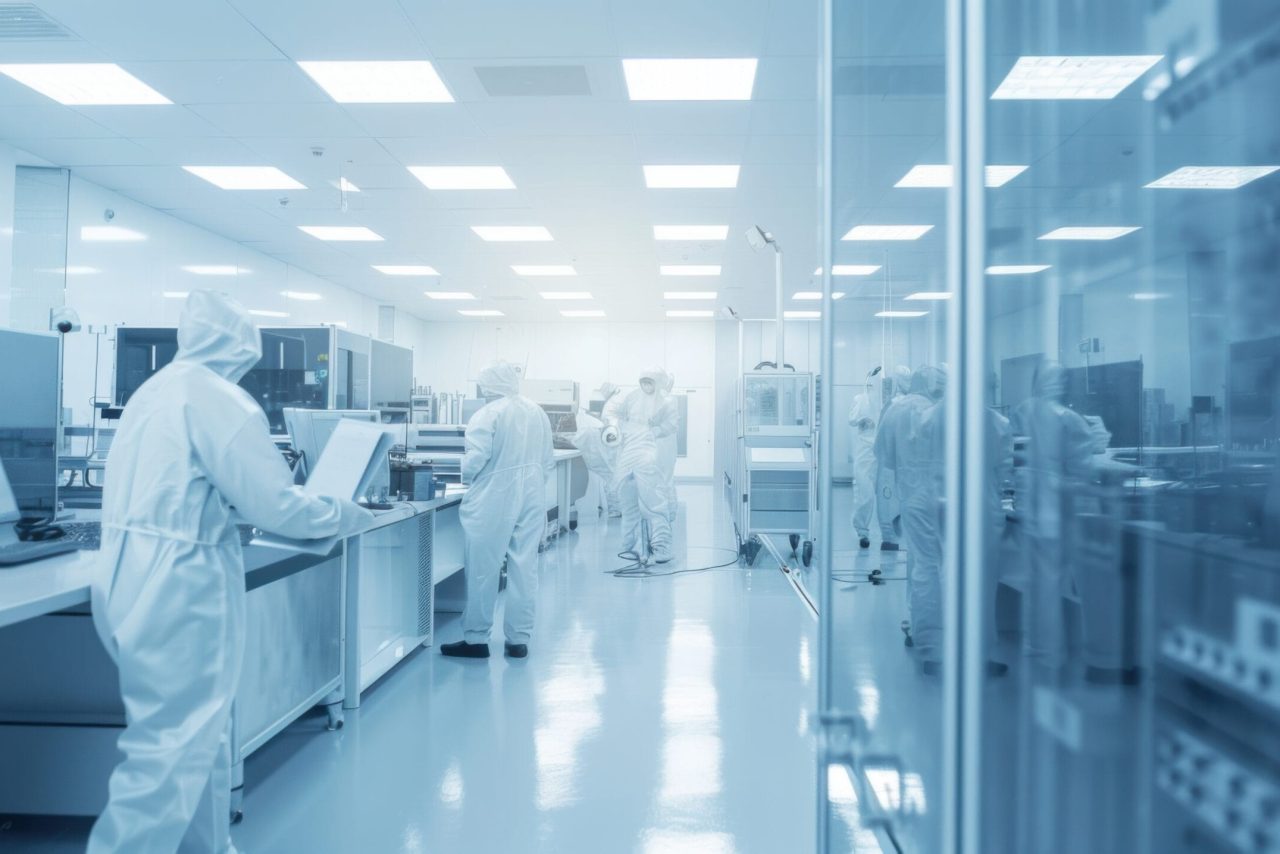
Cleanrooms, also known as controlled contamination environments, are enclosed spaces in which air is extremely pure and the presence of particles is strictly limited.
Inside a cleanroom, temperature, humidity, and pressure are constantly monitored to ensure stable environmental conditions, and strict procedures are in place: everything is designed to prevent the introduction of foreign particles and therefore eliminate cleanliness issues that could arise in various processes and manufacturing operations.
Alongside technological innovations and current trends, cleanrooms are among the key topics at Parts2clean, the leading international trade fair for industrial component and surface cleaning, scheduled from 7 to 9 October 2025 in Stuttgart.
The importance of these environments, with extremely high standards of control and cleanliness, is reflected in production processes across the electronics, food, pharmaceutical, automotive, optical, and other sectors.
What are cleanrooms for? What is their function?
Cleanrooms are highly controlled environments in which the air is between 10,000 and 50,000 times cleaner than normal ambient air. They are spaces where highly precise and critical operations take place.
Take microchips, for example. These components are thousands of times smaller than a dust particle, which could cover them, damage them, and cause system short circuits. The same applies to pharmaceutical production, where companies must guarantee absolute purity and quality to end users, avoiding any contamination throughout the entire process.
Cleanrooms are used in many fields to produce or manufacture:
- Semiconductors such as electronic chips and microchips.
- Electronic components such as sensors, optical devices, and LCD displays.
- Pharmaceuticals and medical products.
- Miniaturized precision mechanical components.
- Aerospace parts for aircraft and satellites.
- Optical lenses for cameras and telescopes.
- Medical devices such as surgical instruments, implants, and prostheses.
- Scientific research, such as nanotechnology.
- Food and beverage products.
Cleanrooms: management systems and architectures
The design of a cleanroom is not standardized; it depends on the application, the product being manufactured, and specific guidelines. Each cleanroom may vary in size, configuration, and whether it is permanent or temporary.
The core element is the filtration and ventilation system, which uses high-efficiency filters to capture microscopic particles and manages an airflow that is uniform and unidirectional. In addition, the air pressure inside is always positive, preventing contamination from adjacent environments.
- Materials inside must not release particles.
- Floors and coatings must be antistatic, smooth, and easy to clean.
- Joints have rounded corners to minimize dust accumulation.
- Fixtures and power outlets are flush-mounted to avoid discontinuities.
- Pipes and tubing are placed externally.
Cleanroom operators
To ensure hygiene and safety standards and avoid contamination, operators wear special garments, including sterilized or disposable suits, caps, masks, and gloves.
Once dressed, personnel must pass through a high-pressure air shower that removes dust and fibers from clothing. Operators are highly trained professionals.
Cleanrooms at Parts2clean
The use of cleanrooms is growing as industry demand requires increasingly precise and advanced manufacturing processes. This topic is not marginal. It will also be addressed at the next edition of Parts2clean, including a dedicated event titled “High Purity cleaning systems as a quality gate for the cleanroom” on 8 October 2025.