

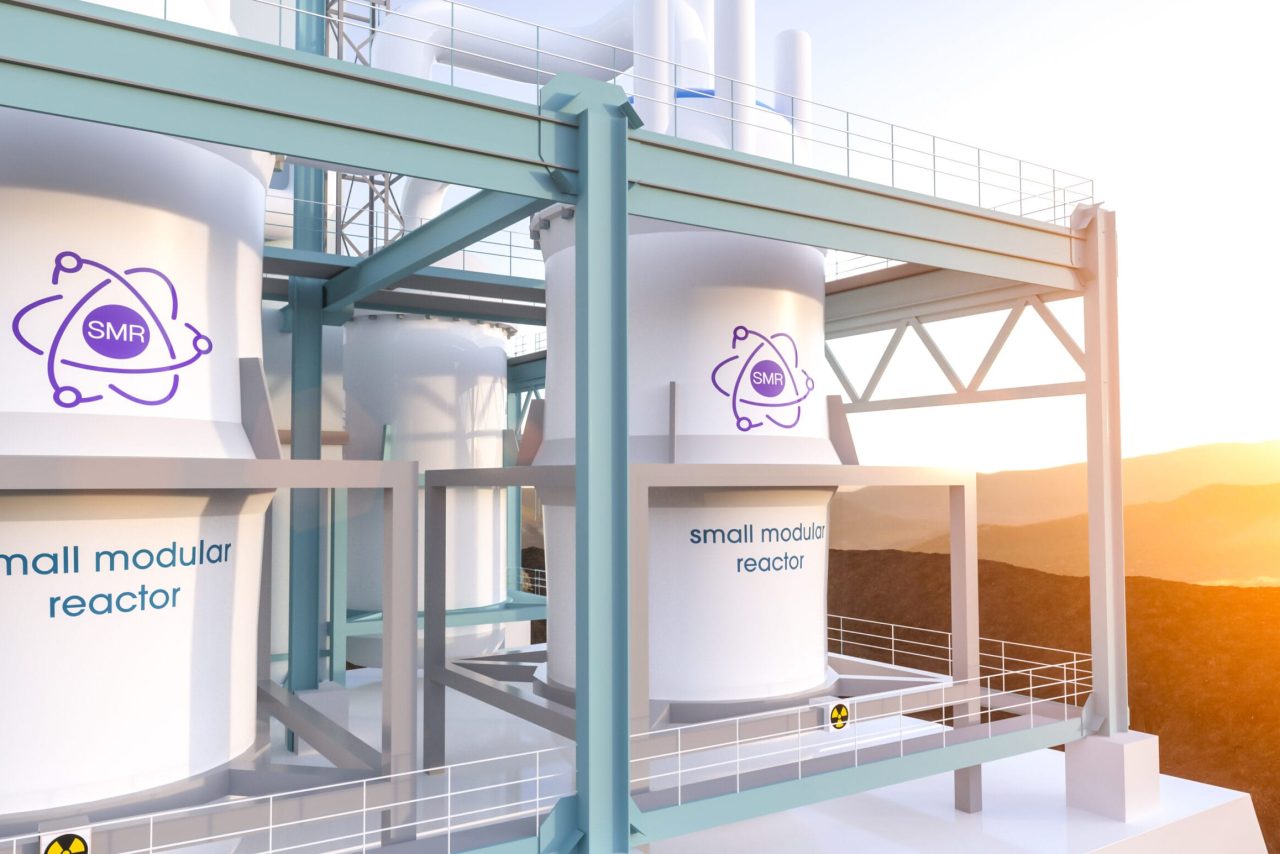
Smaller or fourth-generation nuclear power plants with less bulky waste that decays more quickly. This is the future of nuclear energy, expected to complement renewables by ensuring a continuous supply of electricity.
After decades of stagnation, nuclear energy has returned to the centre of the global debate. But its face has changed: it is now smarter, more modular and more focused on sustainability. Four key factors are driving this renewed momentum: energy security, the need to achieve climate neutrality, the growing involvement of private capital in nuclear innovation and a new wave of technological advances that appears to be accelerating change.
Next-generation nuclear energy is developing along two main paths. On one side are Small Modular Reactors (SMRs) and fourth-generation (Gen-IV) reactors, which promise greater safety and reduced nuclear waste. On the other is nuclear fusion, still at the experimental stage but at the centre of a major industrial effort involving the United States and Europe. Startups such as Oklo, NuScale, TerraPower, Rolls-Royce SMR and Kairos Power are advancing next-generation fission technologies, while Commonwealth Fusion Systems, Helion, Marvel, Renaissance and Proxima Fusion are leading the race towards fusion. In Europe, projects such as Newcleo (headquartered in Turin and London) and Germany’s Proxima Fusion directly connect scientific research with high-value manufacturing. It is a broad and complex ecosystem that, it must be acknowledged, has attracted significant investment but has yet to deliver commercially viable solutions.
Advantages
The main strength of nuclear energy remains its ability to provide continuous power generation: a reactor operates 24 hours a day regardless of weather conditions. This makes it highly complementary to renewable energy sources, which are inherently intermittent. New-generation reactors incorporate passive safety systems that dramatically reduce the risk of accidents while aiming to use innovative fuels or plutonium recycling, offering potential long-term environmental benefits.
From a climate perspective, the International Energy Agency (IEA) estimates that maintaining or expanding the share of nuclear power could prevent up to four billion tonnes of CO₂ emissions by 2050. Moreover, a revival of nuclear energy would generate significant industrial benefits. Growth in the sector could strengthen European manufacturing in precision engineering, automation and advanced materials—fields in which Italy and Germany have traditionally developed strong and widely distributed expertise.
Limitations
Despite its promises, nuclear energy remains a complex option. Construction costs are high and development timelines are long. Although SMRs aim to reduce both, they also increase the number of facilities that must be managed and the complexity of licensing procedures. Gen-IV technologies and nuclear fusion still require decades of research before reaching full industrial maturity. Added to this are local opposition (the NIMBY effect) and the need for a clear and stable regulatory framework, often challenged by inconsistent political commitment. These are significant limitations that almost take on the character of an ideological challenge, as there is no certainty that some of the required technological breakthroughs will necessarily be achieved—or even widely accepted.
From an economic standpoint, renewable energy sources remain more competitive today. The levelised cost of electricity (LCOE) for next-generation nuclear power is estimated at more than $120–150/MWh, compared with approximately $40–60/MWh for solar and wind energy combined with storage. Nevertheless, nuclear power is expected to provide reliable baseload generation and greater grid stability, an increasingly valuable role in energy systems dominated by intermittent renewable sources.
Why (Perhaps) Yes
Viewed from another perspective, for Europe and Italy nuclear energy is not a shortcut but a strategic choice. It could ultimately enhance energy independence, reduce gas consumption during winter demand peaks to almost zero and create new industrial supply chains—from reactor components to fusion materials. However, achieving these objectives requires consistent public policies, long-term investment and a realistic approach.
Today, the priorities remain renewable energy, energy storage and intelligent demand management. If technological progress lives up to expectations, the “new nuclear” could stand alongside solar, wind and hydrogen as one of the pillars of a decarbonised energy system. Whether this will be a sequel or a completely new beginning remains uncertain. What is clear is that the return of nuclear power has already become part of the script for the energy transition.