

From IoT to collaborative robots: how the Fourth Industrial Revolution is paving the way for Industry 5.0
The industrial production world has changed more rapidly in the last twenty years than it did in the previous three centuries.
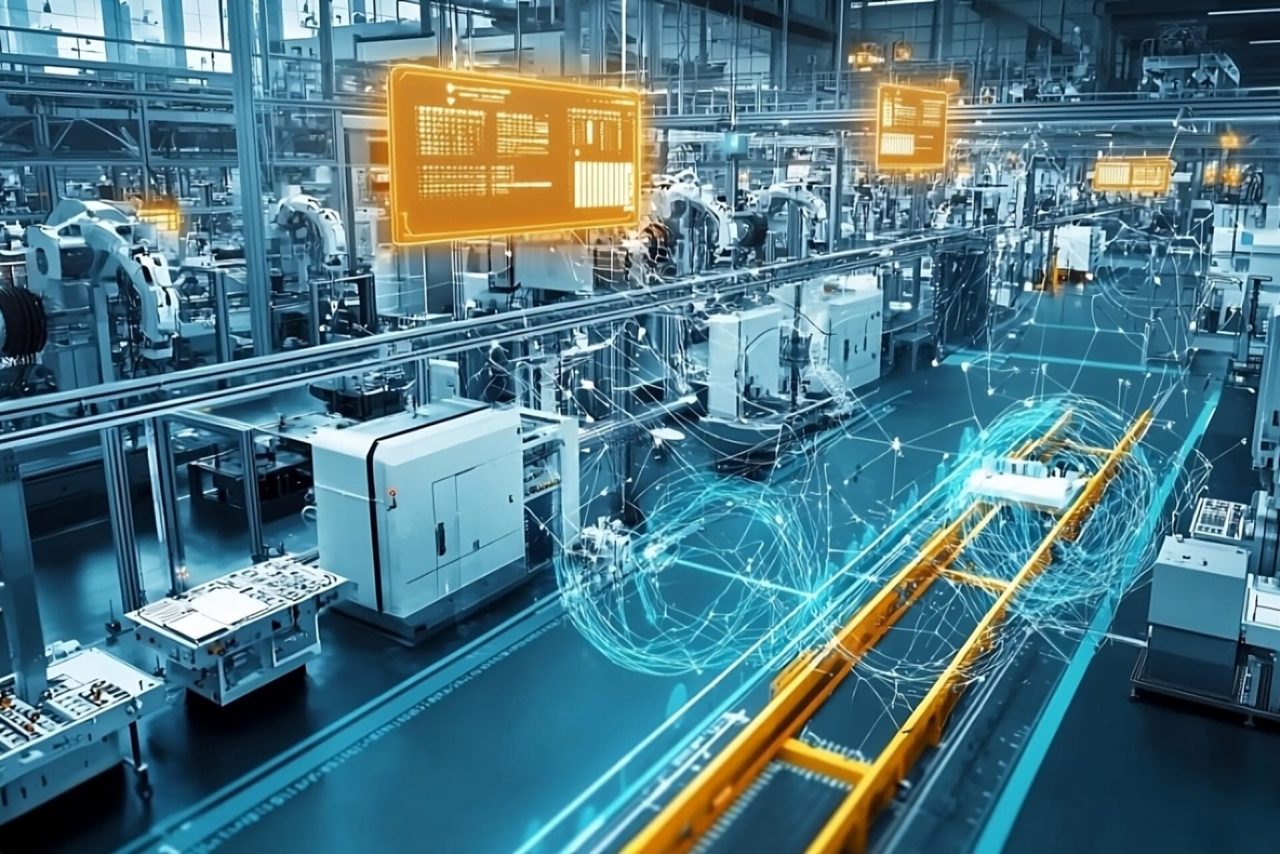
Industry 4.0, often defined as the fourth industrial revolution, is not just a futuristic idea: it is a concrete transformation that combines digital technology, automation and real-time data to create smart, flexible and interconnected factories.
But what does Industry 4.0 really mean?
Unlike previous revolutions—from the mechanisation of the first industrial phase, to electrified mass production, and then automation based on electronics and computing—the fourth revolution focuses on the integration between the physical and digital worlds. Smart sensors, collaborative robots, 3D printing, big data and artificial intelligence are no longer abstract concepts: they are everyday tools reshaping production processes.
The technologies driving the transformation
- Internet of Things (IoT): machines, sensors and devices communicate in real time, creating a continuous flow of data that enables fast and targeted decisions.
- Big Data and advanced analytics: it is not enough to collect data; it must be interpreted. Data analysis allows predictive maintenance, production optimisation and product personalisation.
- Artificial intelligence and machine learning: systems learn from experience, automating complex decisions and continuously improving performance and accuracy.
- Advanced robotics and cobots: collaborative robots work alongside human operators, taking on repetitive or dangerous tasks and freeing time for creative or strategic activities.
- Additive manufacturing: 3D printing enables the production of customised components, reducing waste and speeding up production cycles.
- Augmented and virtual reality: immersive tools for training, predictive maintenance and quality control, reducing errors and downtime.
- Cybersecurity: increasing interconnection requires advanced protection systems to ensure security and production continuity.
- Vertical and horizontal integration: data flows seamlessly across departments and organisational levels, creating a coordinated and intelligent factory.
ERP and MES: the beating heart of the Smart Factory
Behind an Industry 4.0 factory there are not only machines and robots: there is a digital strategy integrating advanced software.
ERP (Enterprise Resource Planning) systems manage resources, processes and information flows, while MES (Manufacturing Execution Systems) monitor, track and optimise production in real time. Together, they transform the company into a Smart Factory, where information and operations are synchronised from customer order to finished product.
The ERP–MES integration enables:
- Operational efficiency: process automation and waste reduction.
- Flexibility: rapid adaptation to market demands.
- Improved quality: continuous monitoring and immediate corrections.
- Informed decision-making: real-time data for better strategies.
- Predictive maintenance: reduced downtime and optimised resource management.
Industry 5.0: the human and sustainable horizon
While Industry 4.0 continues to mature, Industry 5.0 is already emerging—a vision that combines advanced automation with a human-centric and sustainable approach.
The goal is not to replace people, but to empower them: intelligent machines and operators collaborate to create customised products, reduce environmental impact and increase the human value of work.
In other words, the industrial revolution does not stop at technology: it aims for smarter, more responsible production that is closer to the needs of people and the planet.
Industry 4.0 is already here, Industry 5.0 is coming: those who can interpret this transition will be able to lead the future of manufacturing with innovation, efficiency and sustainability.