

Half human and half robot. While the introduction of a wide range of futuristic devices such as smartphones, hearing glasses or hats equipped with solar panels improves quality of life and simplifies everyday activities, it also significantly reduces the distance between humans and machines.
A thin boundary that disappears when people choose to wear an artificial exoskeleton, whose function is to assist or enhance body movements.
And although it is still rare to encounter an artificial exoskeleton today, it is likely that in the very near future people, strapped into these supports, will go shopping or walk through the streets. In the sports field, however, their use has already begun.
This is a well-known future that has been anticipated by video games, anime and science fiction films, including successful titles such as “The Matrix”, “Aliens: The Final Battle” and “Edge of Tomorrow”.
Several models are also available for purchase on e-commerce platforms, as well as on manufacturers’ websites.
Exoskeleton: what is it?
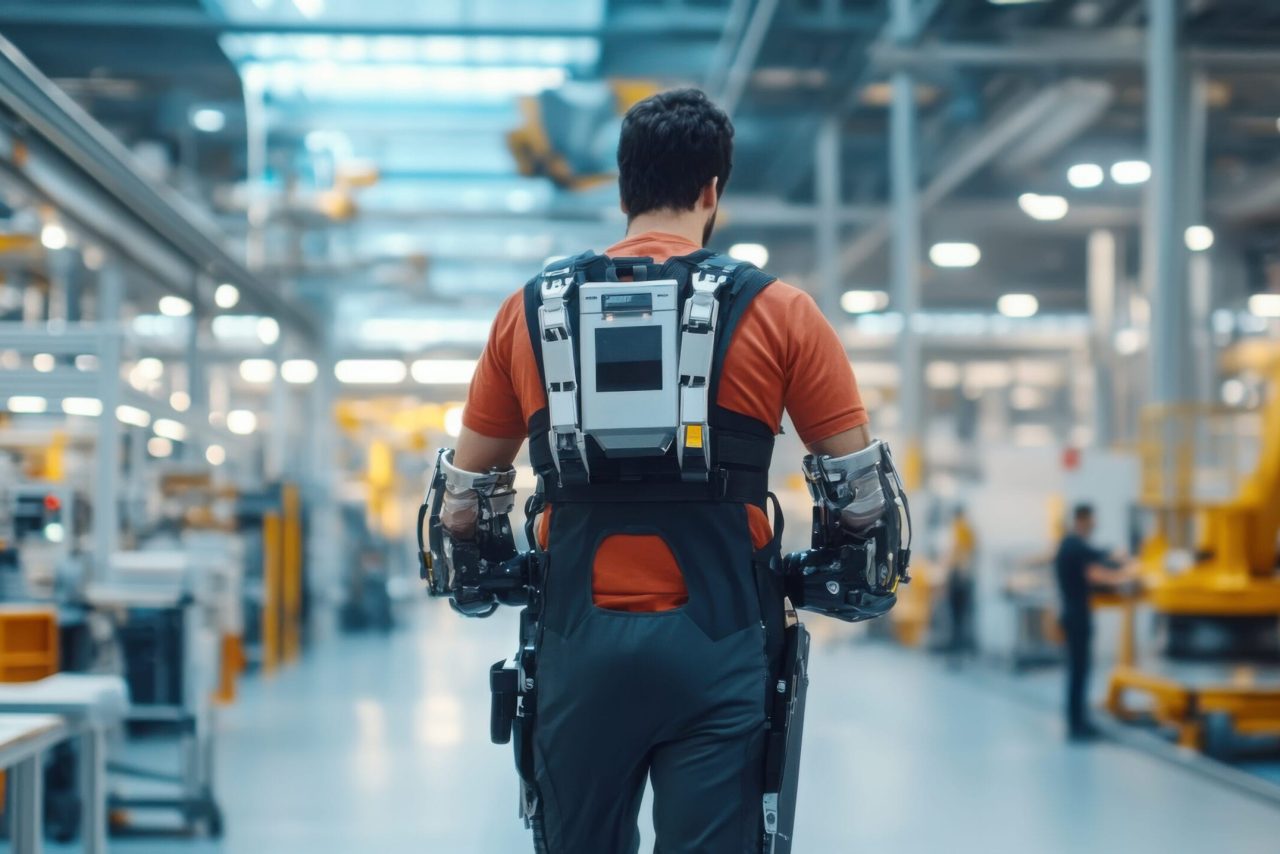
Exoskeletons are advanced wearable robotic systems that enhance motor and physical capabilities: for example, they can amplify strength or improve agility.
They can be considered an artificial musculature made of batteries, mechanisms, motors or actuators, sensors and artificial intelligence which, combined together, recognise the user’s movement patterns and provide optimal support.
There are many exoskeleton models in the world; two key evaluation parameters are weight—which starts from a few kilograms but varies depending on the activity—and the battery, including maximum power output and autonomy.
Main application fields of artificial exoskeletons
Artificial exoskeletons have different functions depending on the field in which they are used. The main sectors where these systems play a key role are four:
- Medical. They support people with walking problems and motor difficulties. They can assist arm and leg movements, stimulate muscles and the nervous system during rehabilitation, and help paralysed individuals walk again.
- Industry. They reduce fatigue, tiredness and injury risk during physically demanding tasks. Specifically, they help lift heavy loads or maintain awkward positions for long periods, reducing strain and preventing injuries and disorders caused by repetitive movements. In industry, in addition to active exoskeletons powered by motors and electricity, there are also passive devices based on levers, springs and elastic materials that redistribute muscular load.
- Rescue and emergencies. Designed for situations faced daily by firefighters, rescuers and paramedics, they enable movement in hazardous environments, transportation of people and lifting of heavy objects. Think of debris removal after an earthquake or firefighting operations with oxygen tanks and bulky protective gear. These systems protect users from excessive effort, physical stress and injuries.
- Military. Wearing exoskeletons, soldiers can benefit from enhanced physical capabilities during missions: increased strength, improved endurance and reduced fatigue. Military equipment is very heavy (for example, an assault rifle used by the Italian Army weighs about 3 kg unloaded), and these systems represent a valuable aid.
Exoskeletons in industry
The industrial sector is particularly receptive to exoskeletons because the benefits already observed for workers extend to the entire organisation:
- They increase productivity, as working times decrease and efficiency rises.
- They improve overall safety, reducing the risk of accidents.
- They reduce operational costs thanks also to a consequent decrease in absences and occupational diseases.
The sectors with the highest adoption rates are logistics and goods handling, construction, manufacturing, healthcare and agri-food.
A possible future with exoskeletons
Various market studies, although not always consistent in their figures, describe the global exoskeleton market as strongly growing (forecasts indicate multi-billion-dollar increases over the next five years or so). Engineers are combining expertise to create more innovative, intelligent, lightweight and above all affordable exoskeleton models, opening up new scenarios. Very soon, in fact, they may become everyday tools.