
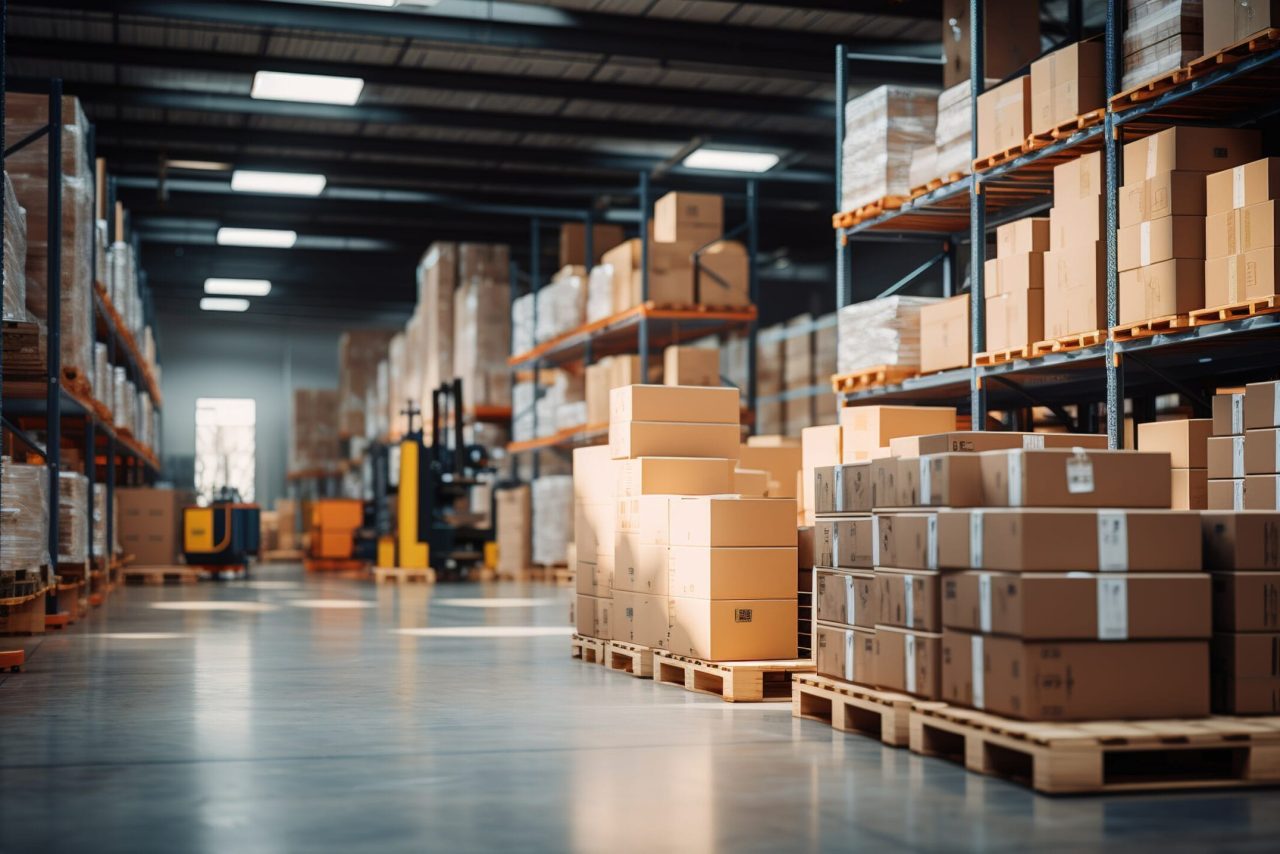
In recent years, sustainability has shifted from an optional concept to a fundamental requirement even in intralogistics: it is no longer simply about “doing more with less”, but about rethinking the warehouse as a fully integrated energy ecosystem. In the context of internal logistics, material flows, automated handling and robotic systems can no longer be evaluated only in terms of operational efficiency: environmental impact, energy consumption, CO₂ emissions and the footprint of the facility itself must also be considered. This is driven by multiple factors, ranging from cost savings typically achieved through input optimisation, to reputational and marketing advantages that attract customers interested in green partners, as well as economic incentives linked to green credits and sustainability reporting.
“Green warehouses” are emerging as a concrete response to this need and can act on several key assets. The approach starts from well-known technologies, but applied with a new logic: high-efficiency motors and inverters (such as IE4/IE5) in handling systems, energy recovery systems in braking operations of AS/RS (Automated Storage & Retrieval Systems), and lithium-ion or LiFePO₄ batteries for shuttles and mobile robots, capable of longer cycles, faster charging and lower environmental impact. It is also worth noting that longer cycles and faster charging are essential in AGV and AMR business models and in general for all intralogistics mobile systems, where downtime represents a critical cost factor.
Industry studies suggest that the adoption of regenerative motors in AS/RS (Automated Storage and Retrieval Systems—high-density automated storage systems) can recover up to 30% of consumed energy, significantly reducing the energy footprint of an automated warehouse.
Innovation opportunities are also emerging in software management and monitoring systems. A modern WMS integrated with ESG modules, capable of correlating warehouse movements, electricity consumption, machine hours and emissions, allows environmental performance to be measured concretely. This is how the warehouse is no longer only managed, but measured and optimised as an energy system. A MIT Center for Transportation & Logistics report highlights how the transition toward highly automated hubs requires a rethink of energy strategies, including renewable sources (solar, wind) and low-carbon materials, in addition to pure operational efficiency. Moreover, warehouses could potentially become not only energy consumers but also real “lungs” of a smart grid, capable of feeding energy back into the grid during peak times and drawing it when needed, benefiting from tariff differentials.
Storage density is another key factor: optimising space through vertical racking, shuttle systems and compact layouts reduces land footprint, heating and cooling costs, and indirect emissions linked to construction or expansion of facilities. A study conducted under “Warehousing for a Greener Tomorrow” shows that facilities combining automation with sustainable design can reduce energy consumption, waste and unused space volumes.
Another increasingly relevant aspect concerns internal mobility: AGVs/AMRs operating in controlled environments, batteries that opportunistically recharge during micro-pauses, and wireless charging systems that minimise standby time. The adoption of these solutions means not only higher efficiency, but also lower environmental impact: less energy consumption, fewer emissions and better workflow integration.
However, the transition toward a “green” warehouse is not without challenges. The first obstacle is the initial investment: modernising systems, introducing new software and upgrading electrical infrastructure can require significant capital. At the same time, many companies report a lack of shared standards in intralogistics sustainability, making it difficult to evaluate partners and technologies consistently.
Another critical issue is property ownership: many logistics platforms are leased, and installing solar panels, energy backup systems or fixed infrastructure can be complex when building control lies with a third party. System integration is also neither simple nor frictionless.
Finally, the human factor must not be overlooked: it is essential to train personnel, define new processes, promote a culture of sustainability and integrate environmental goals into operational KPIs. Ultimately, the transition to a sustainable model requires the entire chain—from engineering to production, from logistics to the end customer—to share the vision, because the failure of even a single link risks undermining the entire system.
In conclusion, the automated warehouse of the future will not only be fast and flexible: it will be green, measurable and modular. The technologies already exist, as do the measurement tools; what will make the difference is strategic coherence. Companies able to combine automation, control software, energy efficiency and sustainable design will gain a strong competitive and strategic advantage. In a world where supply chains are increasingly scrutinised from an environmental perspective, the “green” warehouse is set not to remain a passing trend, but to become a new standard.