
How technologies are reshaping global industrial supply chains
Industrial trade fairs are no longer just places to discover new machinery or sign commercial agreements: they are becoming true barometers of the future.
And by observing them closely, one can understand much more about tomorrow’s factory than by reading reports or financial charts.
From automation to industrial self-awareness
Where are we heading?
Towards an industry that “thinks” inside and outside the factory.
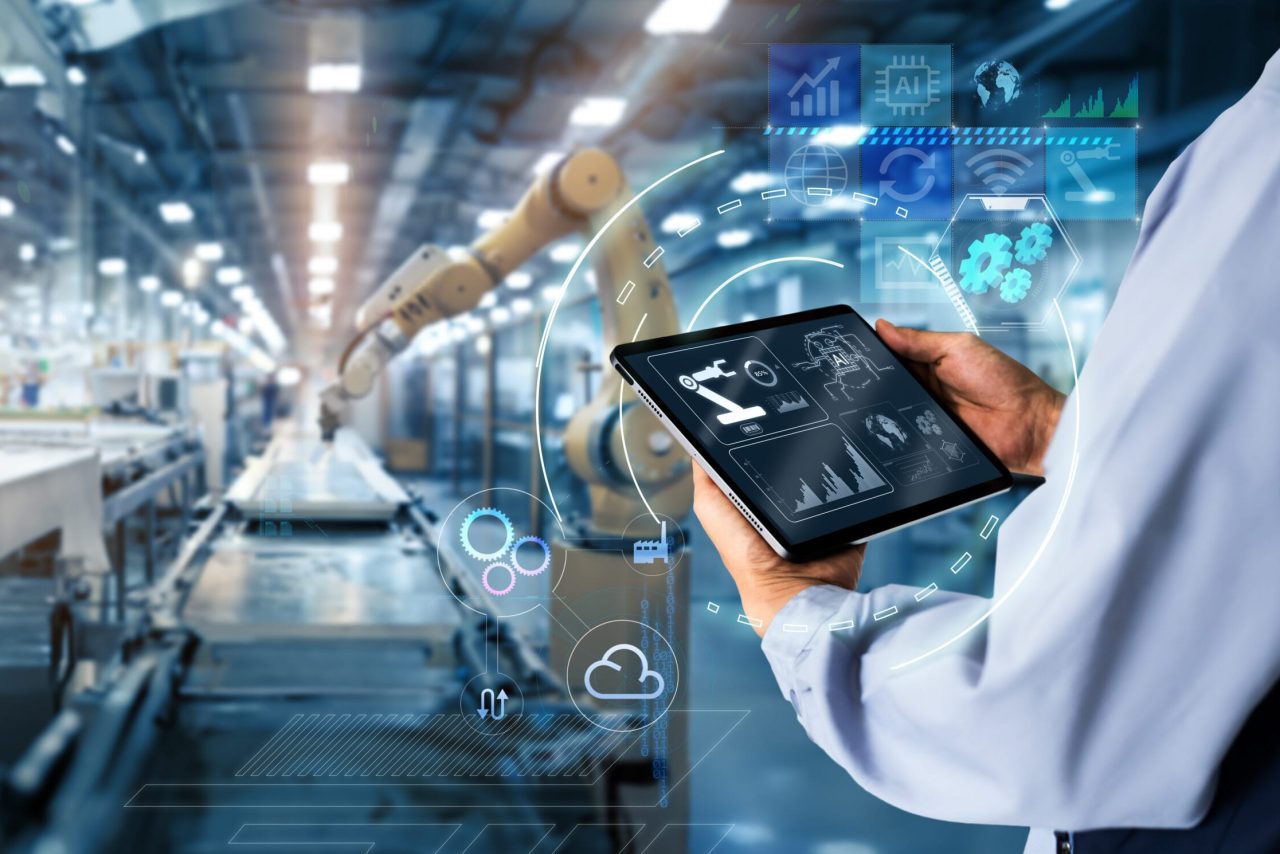
Machines capable not only of moving, bending or assembling, but also of learning: adaptive automation, intelligent sensors, algorithms that predict failures before they happen.
The factory never stops, maintenance becomes an invisible continuum. But a question arises: are we hyper-technologizing production before building a shared industrial ethics for intelligent machines?
Energy: the new backbone of global manufacturing
Producing is no longer only about “what” and “how”, but also “with what”.
Energy has become the strategic variable of global industry. Companies are increasingly looking at green hydrogen as the fuel of the future, or testing corporate micro-grids powered by renewables and storage systems. Yes, we can imagine energy-self-sufficient industries, but the challenge is: will green energy truly become democratic, or remain a privilege for high-margin sectors?
Cybersecurity and OT/IT: two worlds that can no longer ignore each other
The convergence between OT (Operational Technology) and IT (Information Technology) is not just technical: it is an unavoidable marriage.
Production lines, digital sales, connected supply chains.
But every access point is a potential vulnerability. Today, ransomware can shut down a steel plant, not just steal data.
The era of zero trust architecture has begun: trust nothing, not even your machines.
Trade fairs: not showcases, but platforms of shared visions
What is interesting is that trade fairs — like HANNOVER MESSE — are no longer a “parade of booths” but have become places where the market discusses meaning, vision, and industrial responsibility.
Those who enter a technology fair today are not just looking for products, but for ideas on how to do business in a more global, interoperable and less extractive way.
Sustainability: between greenwashing and real business models
An essential question echoes through exhibition halls: is sustainability a product line or a systemic ethical transformation?
Everyone talks about “carbon neutrality”, but few truly accept the cost of reshaping processes and supply chains. Solutions exist — bio-based materials, hydrogen, advanced recycling — but real industrial commitment is needed.
The risk? That sustainability becomes what Industry 4.0 has often been: a strong slogan in presentations, but little concrete action.
Two questions we should ask ourselves
- Are we building technologies to improve quality of life, or only to increase productivity?
- Is the digital revolution truly inclusive for SMEs and smaller supply chains, or does it risk widening an already visible gap?