


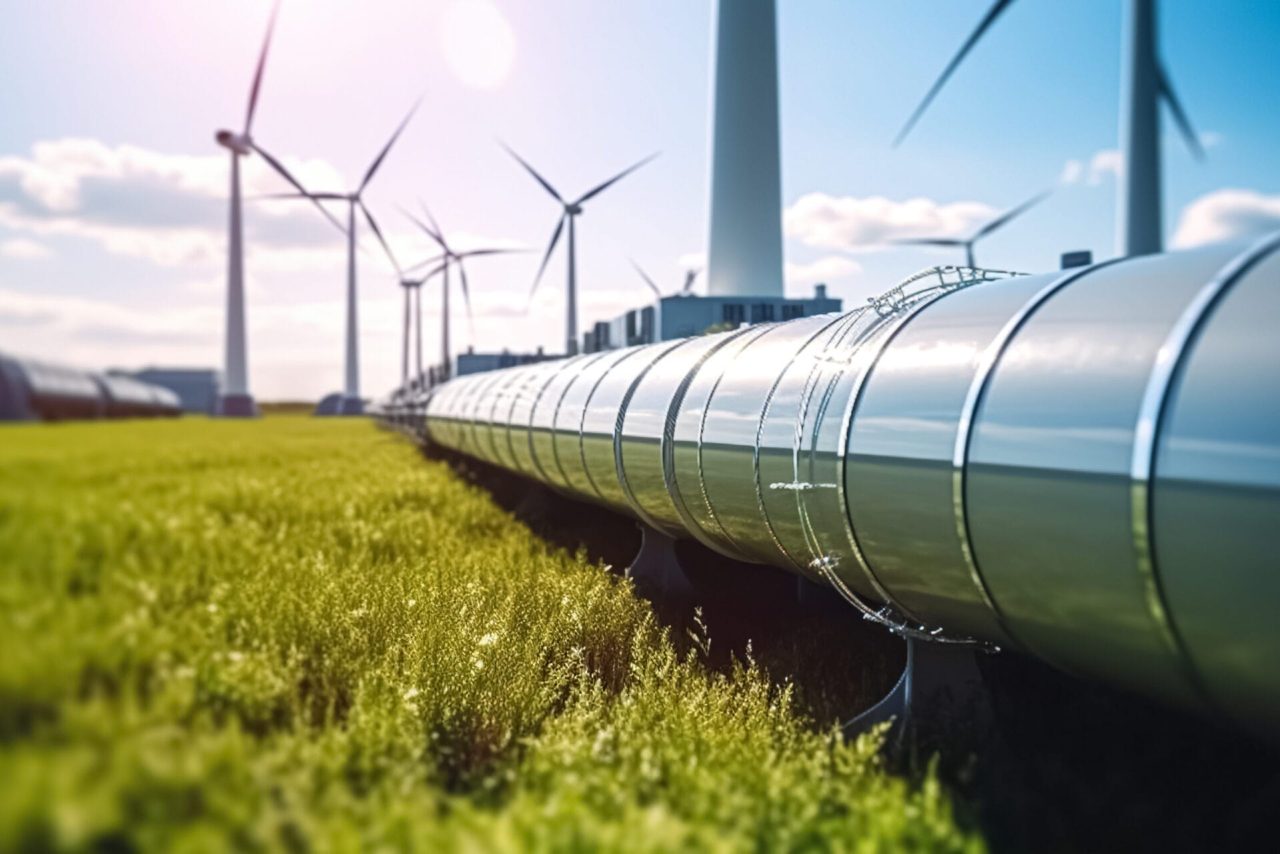
Hydrogen Valleys represent one of the strategic hubs of the European energy transition. These are territorial or regional ecosystems in which the entire hydrogen value chain – from production to storage, from transport to end uses – is developed in an integrated and coordinated way, creating synergies between industry, research, infrastructure and public policies.
These “valleys” are created with a clear goal: to bring hydrogen supply and demand within the same geographical area, promoting the decarbonisation of hard-to-electrify sectors such as heavy industry and transport, thereby contributing to the achievement of European climate targets.
A building block of the RePowerEU strategy
The European Commission has identified Hydrogen Valleys as key infrastructure for the expansion of the hydrogen economy within the RePowerEU plan. In this context, the Clean Hydrogen Joint Undertaking (Clean Hydrogen JU) has funded eighteen projects across seventeen European countries, with a total investment exceeding €1.2 billion, of which €211 million comes directly from EU funds.
The goal is to create regional value chains capable of connecting with each other and, in the long term, feeding a continental network for the production and distribution of green hydrogen. In this direction also moves the European Hydrogen Backbone project, which aims to build a dedicated hydrogen pipeline network across Europe. Among the strategic corridors identified, the SoutH2 Corridor will play a crucial role: it will connect North Africa – where solar energy can ensure competitively priced green hydrogen – with Central Europe, passing through Italy.
Italy, a natural bridge between Southern and Northern Europe
Italy holds a strategic position in this scenario. On one hand, it represents a potentially large consumer of hydrogen due to its energy-intensive industrial base; on the other, it can become a natural hub between the Mediterranean and Northern Europe, leveraging its geographical position and existing infrastructure network.
In this direction goes the National Recovery and Resilience Plan (PNRR), which allocates €3.64 billion to the development of the hydrogen sector, including €500 million dedicated to the creation of 52 Hydrogen Valleys and an additional €90 million from RePowerEU. The distribution of projects shows a strong focus on Southern Italy, where more than half of the investments are concentrated. Campania, Apulia and Sicily are among the most involved regions, while in the North Lombardy and Trentino-Alto Adige stand out with projects already in advanced stages of development. The Hydrogen Valleys are expected to be operational by 30 June 2026, although several projects are still under construction or technical upgrading.
Ecosystems under construction
Italian Hydrogen Valleys are emerging as laboratories of the transition, capable of integrating renewable production, technological innovation and concrete applications.
Among the most significant is the Apulia Hydrogen Valley, which is part of a strategic industrial and logistics context for Southern Italy. The project, supported by strong public-private partnerships, aims to produce green hydrogen by leveraging the region’s high availability of renewable energy and to use it in industrial applications and heavy transport. Apulia is thus positioning itself as a true hydrogen hub in Southern Italy, also connected to future Mediterranean energy corridors.
In the Alpine region, the South Tyrol Hydrogen Valley, developed around the SASA Bolzano project, represents a model of a local and integrated value chain. The initiative combines renewable-based production, storage and direct use in public transport: SASA’s hydrogen bus fleet is currently one of the most advanced zero-emission mobility examples in Europe. The infrastructure, powered by local hydropower, shows how even small territories can develop complete and potentially self-sufficient energy ecosystems.
These experiences also show how the creation of a local hydrogen ecosystem can generate a multiplier effect, attracting new investments and strengthening industrial and scientific expertise in the territory.
A multiplier effect for the value chain
The underlying idea is that Hydrogen Valleys can act as a driver for the entire hydrogen ecosystem, overcoming the traditional “chicken and egg” paradox: the lack of demand that discourages plant construction and the lack of plants that prevents demand from developing.
These pilot projects allow testing technologies, business models and public-private partnerships, generating industrial and employment spillovers at local and regional level. However, it remains essential to ensure support also during the operational phase, especially for operating costs (OPEX) related to electricity, which represent the largest expense and may compromise long-term project viability.
Towards a European hydrogen network
Hydrogen Valleys are not intended as an endpoint, but rather as a launching pad. Around these ecosystems, national and European-scale infrastructures are expected to develop in a second phase, integrated with renewable energy expansion scenarios.
If Europe succeeds in connecting its valleys into a single energy network, hydrogen could become not only a decarbonisation vector, but also a driver of economic and industrial integration between North and South, East and West of the continent. And Italy, as a natural Mediterranean bridge, could play a leading role in this new geography of clean energy.