

The possibilities offered by 3D printers in personalized manufacturing and prototyping are extremely broad, to the point that it becomes difficult—if not impossible—to define a clear boundary for their use. Applications, by way of example but not limited to, are diverse and span several fields: domestic DIY, industrial, medical, and construction.
There are even commercially available models dedicated to the food sector that allow the manipulation of food and the creation of unique dishes.
The evolution of technological tools and the introduction of artificial intelligence, which for example removes barriers to 3D design for non-experts, frees 3D printing from any significant constraints in its use. It is therefore legitimate—and increasingly common—to ask: what will not be possible in a few years?
How 3D printers work
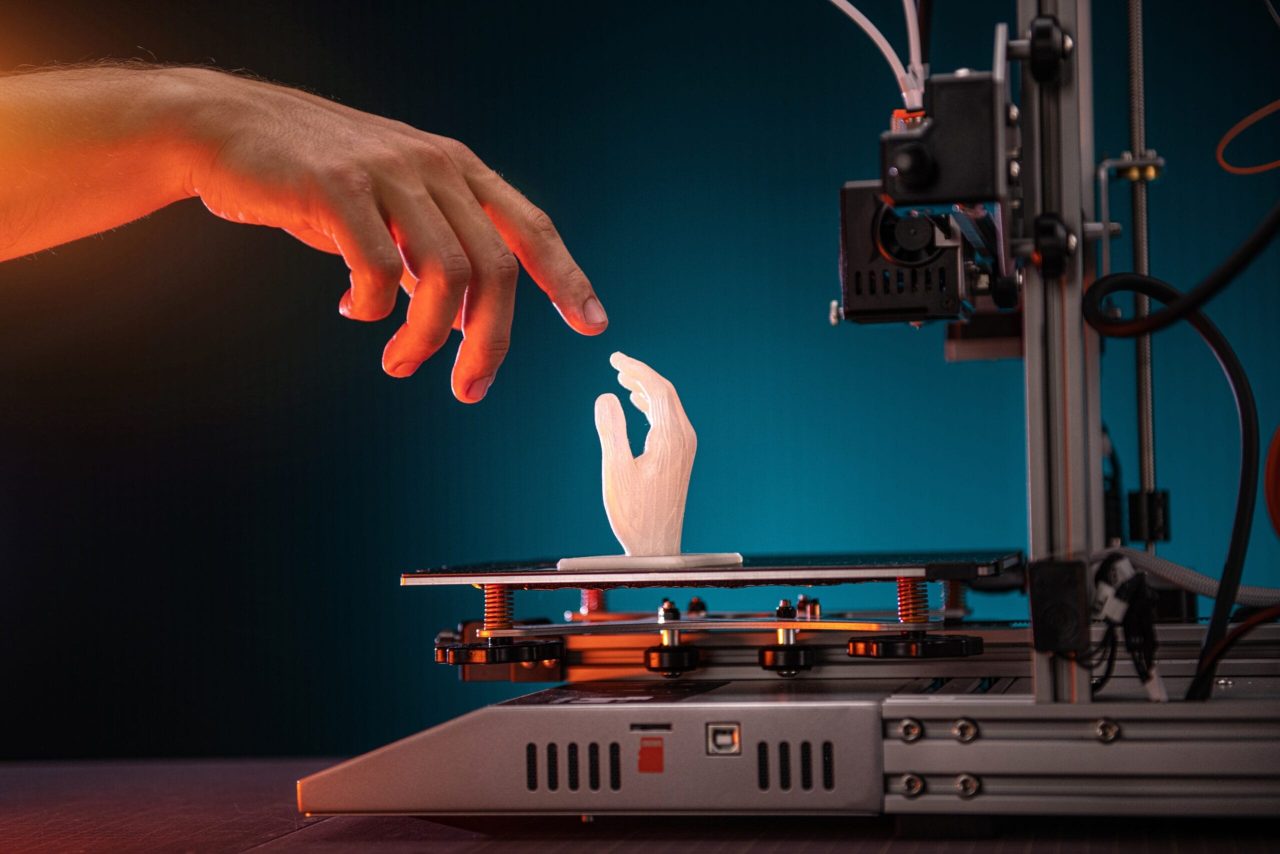
A 3D printer is a machine capable of creating real, three-dimensional objects from an idea that originates in the mind and takes digital form. Unlike traditional office printers, which use paper and ink, 3D printers deposit physical material such as plastic, resin, or metal.
3D printing takes place by layering material one layer at a time until the object is fully formed.
This process is called additive manufacturing because it involves adding material. In practice, it is the opposite of milling and turning processes, which remove material from a starting block.
Overall, the main phases of the 3D printing process are four:
- Designing the 3D model using dedicated software, i.e., creating a digital file of the object to be printed containing its three-dimensional geometry.
- “Slicing”, considered the translation step for the printer. The digital file is processed by software called a slicer (there are several types), which divides the model into horizontal layers, often hundreds or thousands. These layers represent the material deposits that the printer will lay down on the build platform. The slicer also generates machine-language instructions (G-code), which tell the printer how to move, at what speed, and how much material to use.
- From this stage onward, the actual printing process begins, which varies depending on the type of printer, material, and technology used.
- Removal of supports and excess material, followed by painting and finishing treatments.
The 3D printer and its many uses
What was once considered a niche tool for enthusiasts has now earned a place among the key technologies of modern innovation. In recent years, 3D printers have spread across multiple fields:
- DIY: hobbyists and makers produce household items such as hooks, knobs, keychains, miniatures, and smartphone stands.
- Industry: companies can quickly produce functional prototypes or metal mechanical components. Production also becomes on-demand, meaning only when needed.
- Medicine: customized prosthetics and orthotics, surgical implants, and even biological tissues using living cells (bioprinting), such as skin, bones, and organs used for research and surgical testing.
- Construction: large-scale construction printers can build walls at lower costs and with reduced environmental impact. Entire 3D-printed villages exist worldwide.
- Fashion: designers create clothing, shoes, and accessories using flexible and synthetic materials.
- Art: artists use the technology to create lamps, sculptures, and installations.
- Jewelry: technological advances allow the production of highly detailed precious items.
- Food: one of the most fascinating applications, currently mainly used in haute cuisine. Using ingredients such as chocolate, sugar, pasta, and vegetables, unique dishes can be created. The process is similar to a piping bag depositing material layer by layer. The advantage is extremely high precision and unique forms, while preparation times are long and costs are high.
3D printing is demonstrating remarkable versatility. It is therefore natural to envision a future shaped by printers and to consider these devices pillars of the next industrial revolution.