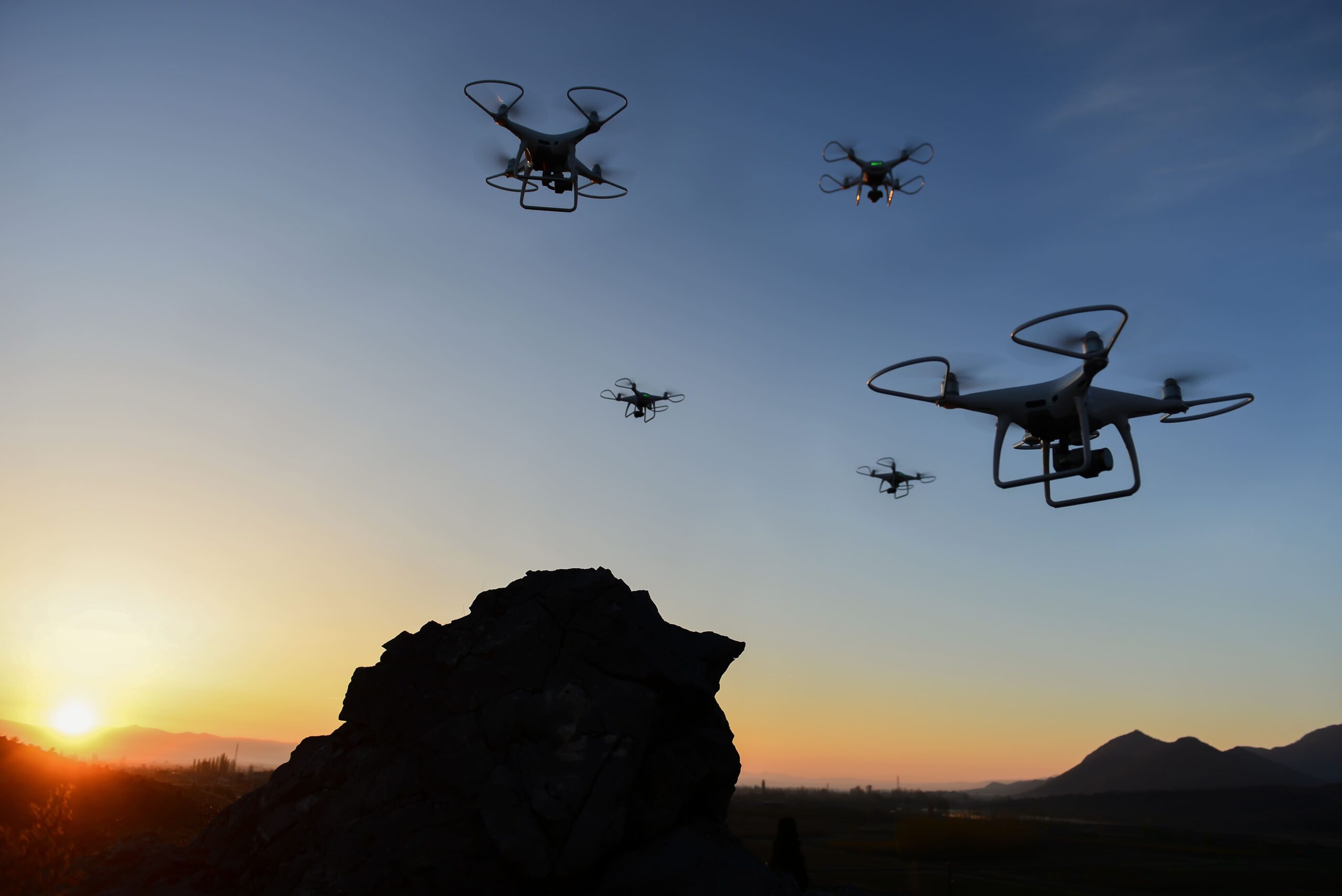

In the world of intralogistics, warehouses are progressively changing their perspective—not only figuratively, but literally as well. Increasingly, the focus is shifting upward, where a new generation of autonomous drones is finding concrete and strategic applications in daily operations. From inventory checks and security to inspections of hard-to-reach areas, these devices are becoming fundamental tools for increasing efficiency, precision, and safety. This is also because, alongside the drone itself, a massive amount of increasingly refined supporting technologies and solutions is growing.
HOW THEY ORIENT THEMSELVES
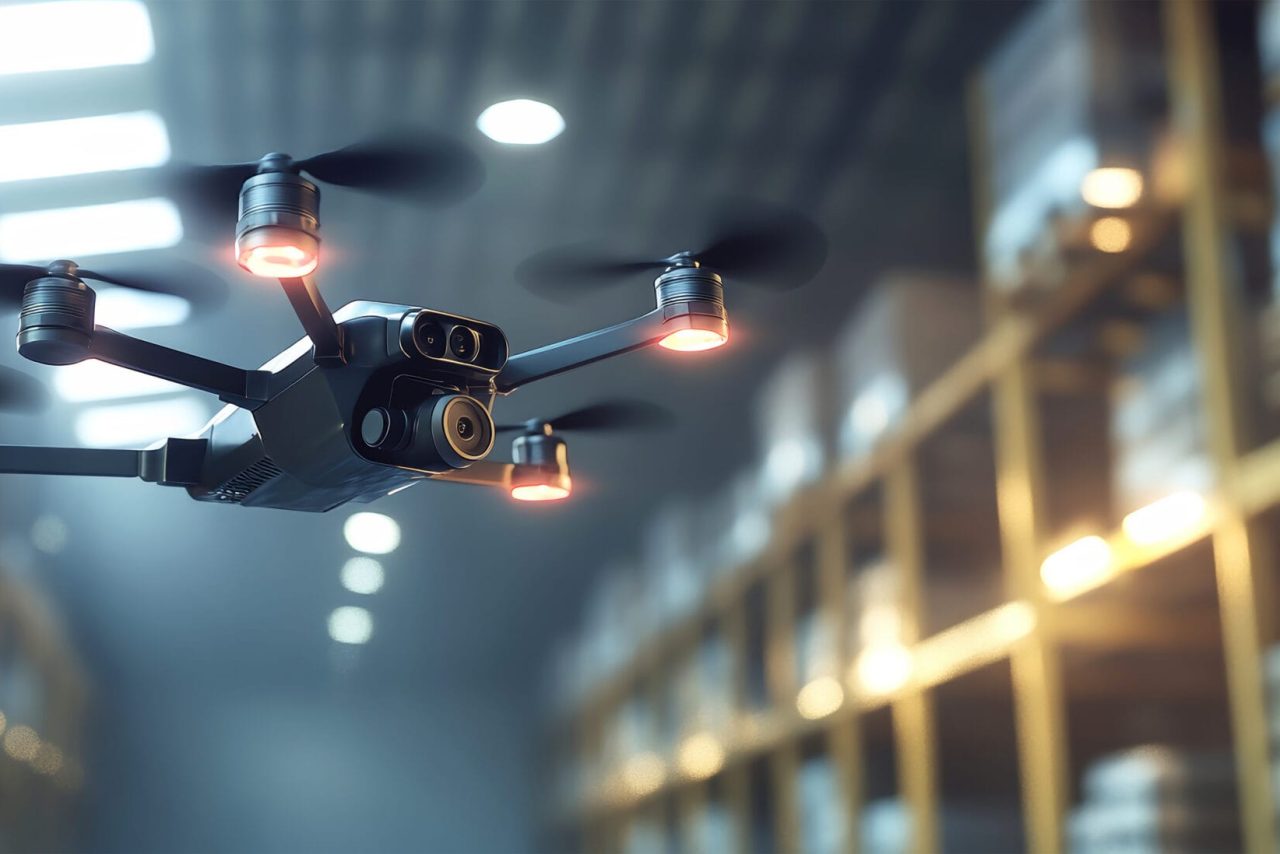
Unlike traditional drones designed for outdoor use, those used in warehouses are engineered for complex indoor environments where GPS signals are absent and maneuvering space is limited. To navigate, they rely on advanced technologies such as SLAM (Simultaneous Localization and Mapping), LiDAR sensors, 3D vision, and artificial intelligence systems capable of recognizing barcodes, QR codes, or RFID tags. In this way, they can move autonomously through the aisles, always knowing their location, scanning shelves, and detecting crucial information for warehouse management.
FROM INVENTORY TO SECURITY
The use of drones in intralogistics focuses primarily on three areas: inventory control, structural inspection, and security. In the first case, they allow for stock counting without interrupting operational activity, drastically reducing the time required compared to traditional methods while increasing the precision of the collected data. In terms of inspection, they represent a fast and safe alternative for monitoring high shelving, electrical systems, or other structural elements normally difficult to reach, eliminating the need for personnel to use aerial work platforms or ladders (a function they perform very well outdoors as well, such as in monitoring large infrastructure). Regarding security, some warehouses use drones to patrol critical areas, detect unauthorized access, or verify the status of systems and environments during nighttime hours or on weekends.
USE CASES
There is no shortage of concrete cases. Indeed, there are systems designed to automate inventory operations in warehouses up to ten meters high with significant results: a 90% reduction in time and greater accuracy, thanks to the elimination of manual errors. International retail giants have also tested the use of drones to carry out daily inventories, moving from operations that previously took weeks to simple flights lasting just a few hours.
The most advanced drone models integrate with Warehouse Management Systems (WMS), updating the availability and location of goods in real-time. Some even operate completely autonomously at night or during closing days, without interfering with daytime activities. Beyond reading data, some devices can interpret it, detecting anomalies such as empty shelves, mispositioned goods, or incorrect codes, thus transforming themselves into tools for quality control and prevention. In this regard, interoperability and the ability for machines to “talk” to each other, exchanging information and “enabling” each other’s intervention, are fundamental.
SOME LIMITATIONS
Naturally, some limitations still exist. Batteries, while constantly evolving, ensure limited autonomy, usually between thirty and forty minutes, although automatic charging stations already exist. Furthermore, the initial investment—including hardware, software, and infrastructure—represents a barrier to entry, especially for smaller companies. Last but not least is the regulatory issue; it is worth noting that rules regarding the use of drones in closed environments are not yet completely uniform, leaving margins of uncertainty that act as a major brake on the sector and its large-scale diffusion.
THE OUTLOOK
Despite everything, the prospects are promising. The diffusion of drones is expected in particular within high-density vertical warehouses, where manual operations are particularly complex and risky. The evolution of on-board technologies, longer battery life, the development of more flexible business models—such as rental or pay-per-use—and a clearer regulatory framework will contribute to making this solution increasingly accessible.
In conclusion, autonomous drones are becoming an integral part of the digital transformation of warehouses. They represent a new point of view—literally and metaphorically—on logistics operations, making them faster, safer, and more efficient. In a landscape where flexibility and resilience are essential requirements, these tools offer a tangible competitive advantage that is destined to grow.