


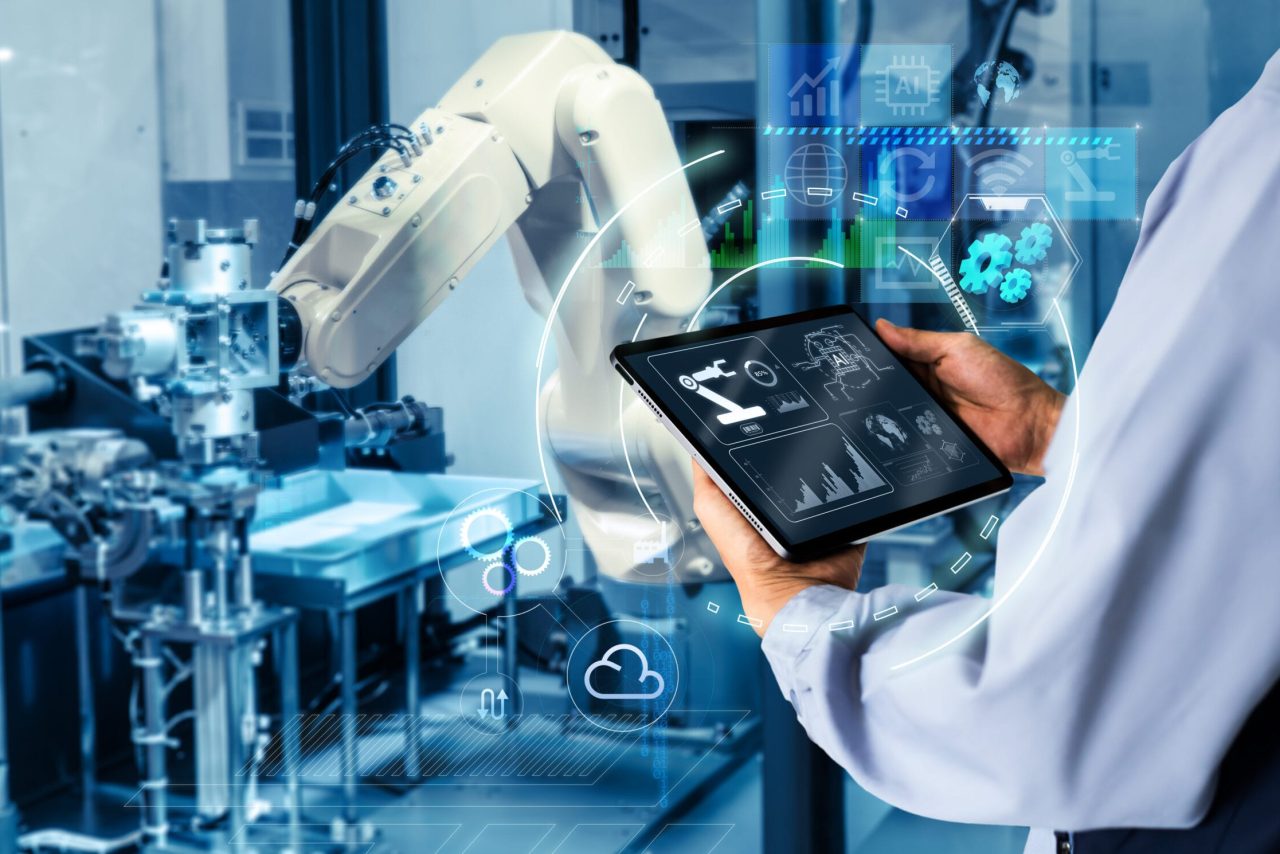
Our daily lives are now deeply intertwined with digital technologies: from education to commerce, from industry to travel, from entertainment to healthcare, and even politics and social relationships. This epochal transformation brings doubts and concerns, but also extraordinary opportunities. Since the digital revolution is still in its early stages, we have the chance to shape it positively for the benefit of humanity and the planet. However, to do so, it is essential to fully understand emerging technologies and their implications.
Among these, artificial intelligence (AI) is revolutionizing the way we interact with machines and how machines interact with each other. AI enables devices to analyze data and perform complex “reasoning,” similar to human thinking. This is not limited to physical machines but also extends to software systems, blurring the boundary between robotics and machine learning. The main components of these systems are machines, software, and connectivity, including cloud computing and big data.
A crucial aspect in the development of AI concerns three fundamental parameters of human behavior: deep knowledge, a form of awareness that enables decisions beyond purely logical reasoning, and the ability to solve problems in different ways depending on the context.
Data, robots and predictive maintenance: industry will never be the same again
Machine learning is a branch of computer science that allows machines to improve their performance over time through learning. This process is based on big data analysis and information acquisition, playing a key role in optimizing business solutions. One of the fields where AI is widely applied is image recognition in manufacturing. This technique, through sophisticated algorithms, extracts colors, shapes, and spatial information from images, providing accurate classification. Machine learning methods are used in applications such as digital assistants, smart robots, audiovisual analysis, automatic translation, and autonomous vehicles. In Industry 4.0, AI contributes to production automation, continuous machine monitoring, and data collection on various operational parameters. This approach enables optimization of maintenance through preventive measures. Predictive maintenance is a concrete example of AI application. It is based on the analysis of specific parameters measured through mathematical models, with the aim of preventing failures before they occur. For example, a renewable energy company combined statistical models, artificial neural networks, and machine learning to detect wind turbine component failures before they happened. This approach helped avoid unplanned downtime and reduce unexpected costs.
The benefits of AI for businesses
Automation improves productivity and efficiency, increasing profits and creating new job opportunities. It also allows humans to focus on more important tasks by automating repetitive processes. To maximize the benefits of AI, companies should:
- Hire new talent with specific skills to integrate technology into the existing business environment.
- Establish a solid digital foundation including appropriate tools and digital resources.
- Focus on growth rather than simple cost reduction, using AI to expand markets and increase sales.
- Be willing to revise long-term business goals, adapting to new business models and revenue streams.
AI has already changed the world, influencing how we interact with devices, people, and organizations. An example is the use of robots in Amazon warehouses, where environments are designed to maximize productivity. Despite limitations, it is clear that robots are reshaping the production economy and their impact will continue to grow.
Artificial Intelligence in Italy: record growth between opportunities and challenges
In 2024, the Italian Artificial Intelligence market reached €1.2 billion, with an impressive +58% year-on-year growth. Generative AI plays a key role, representing 43% of total value, while traditional AI solutions make up the rest. However, Italian companies are moving more slowly than other European countries: only 59% have active projects compared to the EU average of 69%. Awareness of risks is increasing: 40% of companies have defined AI usage guidelines, while 17% have banned unauthorized tools to avoid Shadow AI.
Italy is among the leading countries in Generative AI adoption, with 53% of large companies purchasing licenses, surpassing France, Germany, and the UK. However, only 39% of users have measured productivity gains. Adoption among SMEs remains limited: although 58% are interested in AI, only 7% of small and 15% of medium-sized companies have launched concrete projects. Lack of skills and data management challenges remain the main barriers. Public perception is evolving: 59% of Italians have a positive view, although concerns about deepfakes and job impact are growing.
Italy’s AI ecosystem is expanding, with increased research funding and a growing number of university courses. However, challenges remain: startups struggle to attract investment, and AI adoption in public administration, while growing, is still limited. According to experts from the Artificial Intelligence Observatory of Politecnico di Milano, Italy has the potential to become an innovation hub, but the real challenge is turning interest into a concrete and sustainable strategy. AI is set to revolutionize how we work and live: the future is already here, but are we ready to seize its opportunities?
For those interested in exploring the latest innovations in industrial AI, Hannover Messe is an unmissable opportunity. The fair – held in Hanover from 20 to 24 April 2026 – will feature Industrial AI among its hottest topics. Visitors will experience cutting-edge technologies such as autonomous robots and generative AI. The event will include inspiring presentations, interactive tours, and live demonstrations, showing how AI is transforming industry and setting new standards. It will be a unique opportunity to experience innovation up close and stay ahead of the future. https://www.hannovermesse.de/en/