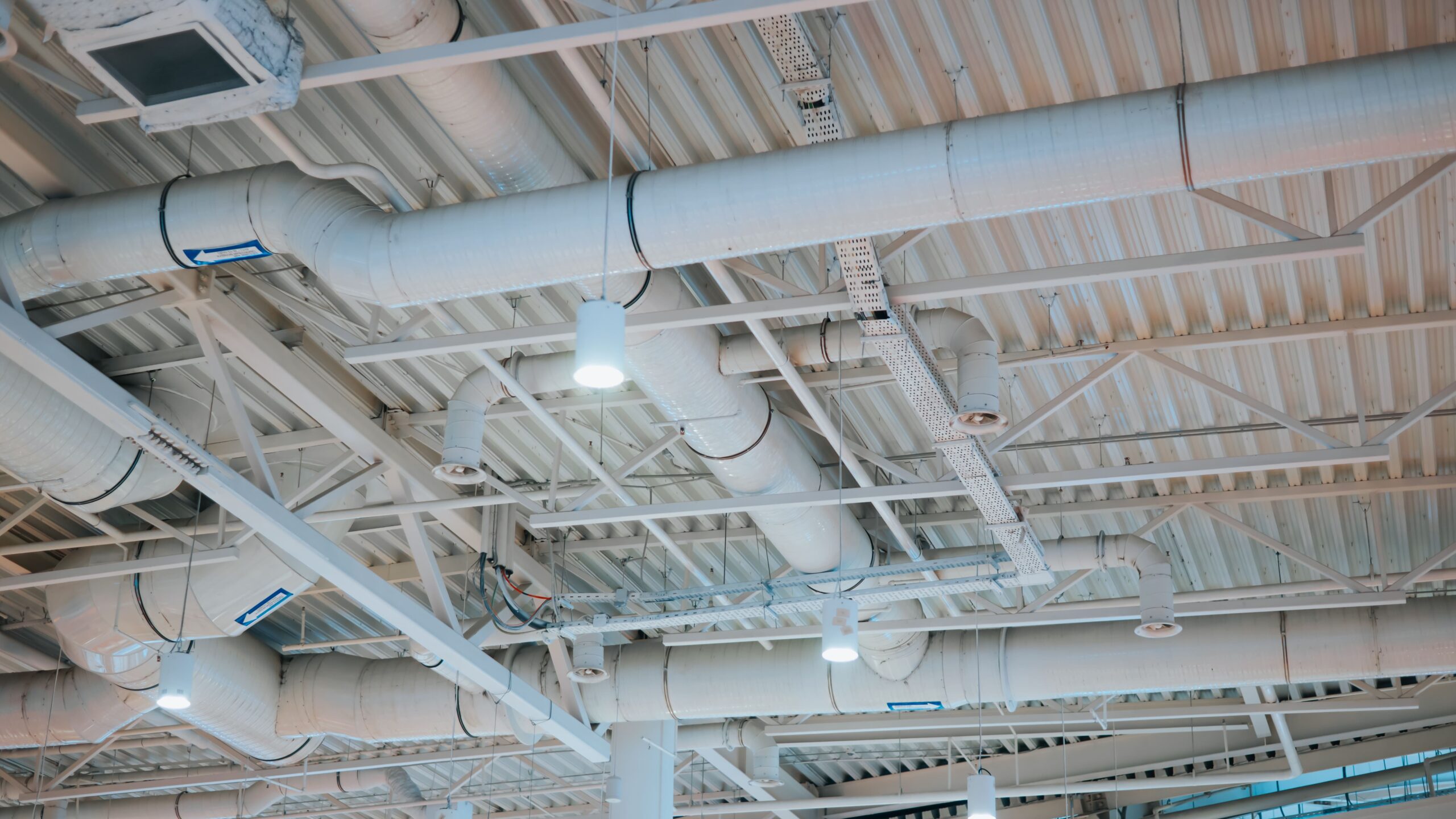
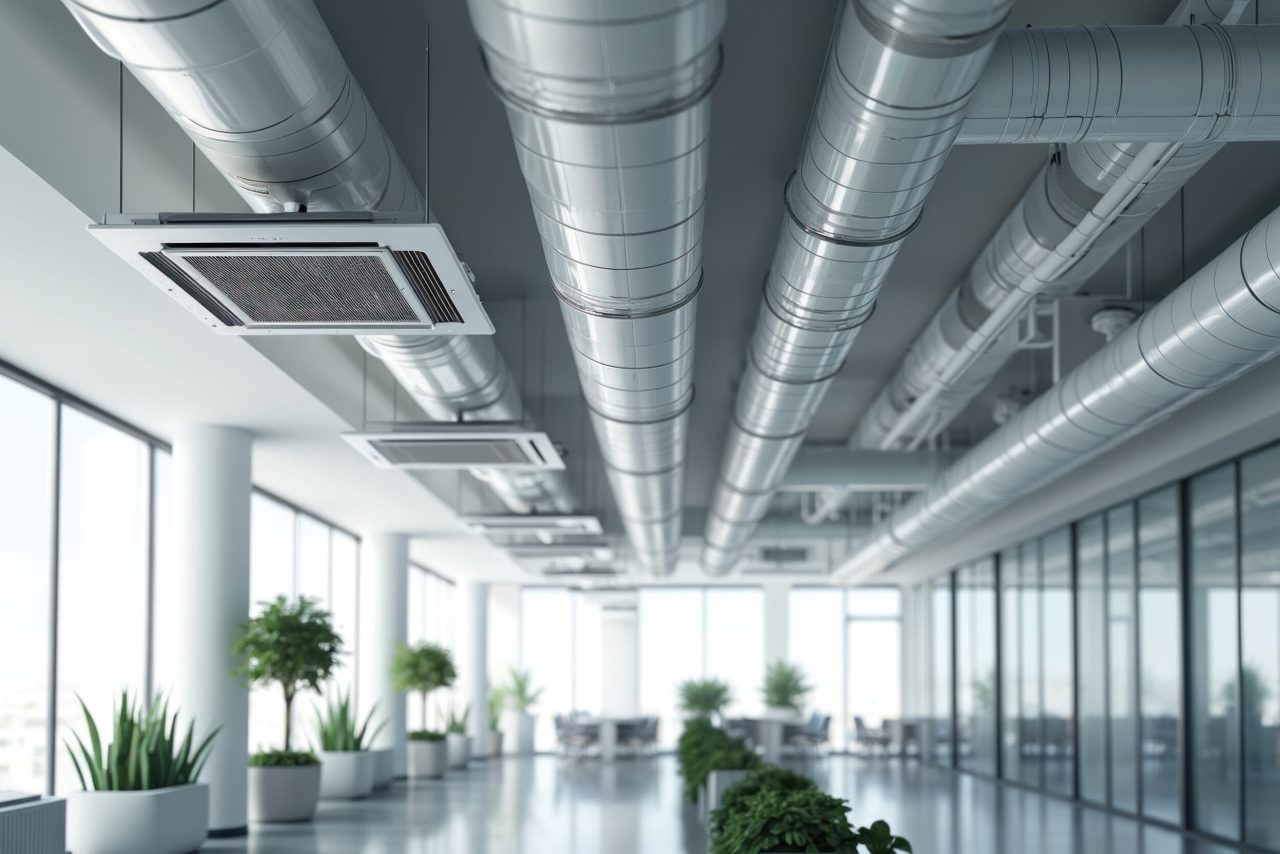
Aeraulic systems are complex setups consisting of devices, equipment, ducts, fans, filters, controls, and terminals that work together to treat and distribute air in enclosed spaces.
Their function is to ensure air quality in terms of purity and in terms of thermal (heating/cooling/heat recovery), hygrometric (humidification/dehumidification), and airflow (ventilation) regulation.
Aeraulic systems are complex structures found almost everywhere; examples include hospitals, offices, schools, universities, hotels, hospitality facilities, nursing homes, shopping centers, and other contexts and buildings with high foot traffic.
It goes without saying that cleaning, sanitization, and maintenance operations are essential to keep the system orderly, functional, and safe for human health.
The difference between an aeration system and an aeraulic system
Aeraulic systems are technically more comprehensive than standard aeration. The former manages the internal climate of an environment in its entirety, while the latter is a simple air exchange. To further clarify the difference, here are two concrete examples.
- The aeraulic system in an office works as follows: it takes air from the outside, filters it, lowers the temperature to cool it in summer, and raises it to heat it in winter. Through a network of ducts, it distributes the air to the various rooms and recovers heat from the outgoing air (using special heat recovery units) in order to save energy.
- An aeration system is represented by the fan in a bathroom that activates when the light is turned on to expel humid air outdoors. Its only function is to prevent the presence of humidity and mold in the room.
Why keeping the system orderly and clean is so important
Periodically cleaning and sanitizing the components of an aeraulic system with specific procedures and products is fundamental for multiple reasons:
- It prevents the air in the rooms from becoming contaminated. Over time, aeraulic ducts, filter systems, and other components can become a breeding ground for dust, mold, fungi, viruses, bacteria, and allergens, risking causes such as allergies, asthma, chronic sinusitis, bronchitis, and respiratory problems for occupants of the enclosed spaces.
- It maintains the energy efficiency of the system, preventing waste. Airflows are obstructed by accumulated dirt, causing fans to work harder, which leads to increased energy consumption and wear.
- Compliance with legal requirements for the protection of indoor occupants, primarily in the healthcare sector.
Phase 1: Cleaning aeraulic systems
The various actions for remediating aeraulic systems can be divided into two macro-categories: cleaning and sanitization.
Cleaning refers to the mechanical removal activities from the ducts and the Air Handling Unit (AHU). The systems most commonly used for this type of operation are three:
- Blowing.
- Brushing (the most frequent method), which is performed using a rotating brush. This device passes through the ducts—which are appropriately sealed to prevent leaks—removing deposits and residues. There is also an alternative to rotary brushes: robots. These are equipped with a camera and guided by operators inside the structures via joysticks to perform cleaning operations.
- Compressed air.
Regardless of the type chosen or the various combinations used, which vary depending on the unique characteristics of each aeraulic system, it will then be necessary to integrate the process with a vacuum cleaner, whose task is to collect the removed material and convey it outward.
The AHU will receive separate treatment through high-pressure water washing using a pressure washer, along with the use of a series of chemical products for degreasing, descaling, and disinfection.
Phase 2: Sanitization
Once cleaning activities—which cover various parts of the air distribution network, including grilles and vents—are completed, the sanitization phase begins.
The purpose of this step is to eliminate agents that contaminate and pollute the air through the nebulization of specific sanitizing products. This allows the microbial load to be returned to optimal standards.
In conclusion: A clean system is an advantage
Given that periodic maintenance and cleaning of aeraulic systems must be carried out by industry professionals, these operations guarantee the perfect efficiency of the system, contributing significantly to the reduction of consumption and long-term operating costs.
Above all, it allows for the guarantee of healthy environments and clean air for indoor occupants, benefiting collective health and well-being.