


The energy transition towards a sustainable planet inevitably depends on so-called rare materials, essential elements for the development of clean energy technologies such as batteries for electric vehicles, wind turbine components, energy-efficient light bulbs, electronic displays, solar panels, advanced chips, and much more.
Given that most of the known global reserves have already been largely exploited, the identification of new mineral deposits of cobalt, lithium, indium, rare earth elements, etc., is complex and extremely costly, as extraction sites are often located in remote areas and deep underground. For this reason, some organisations have started to rely on artificial intelligence.
The use of artificial intelligence in the mining sector
Cost and time constraints linked to mineral exploration and drilling sites can be significantly reduced. Companies and start-ups are indeed leveraging the advantages and potential of artificial intelligence.
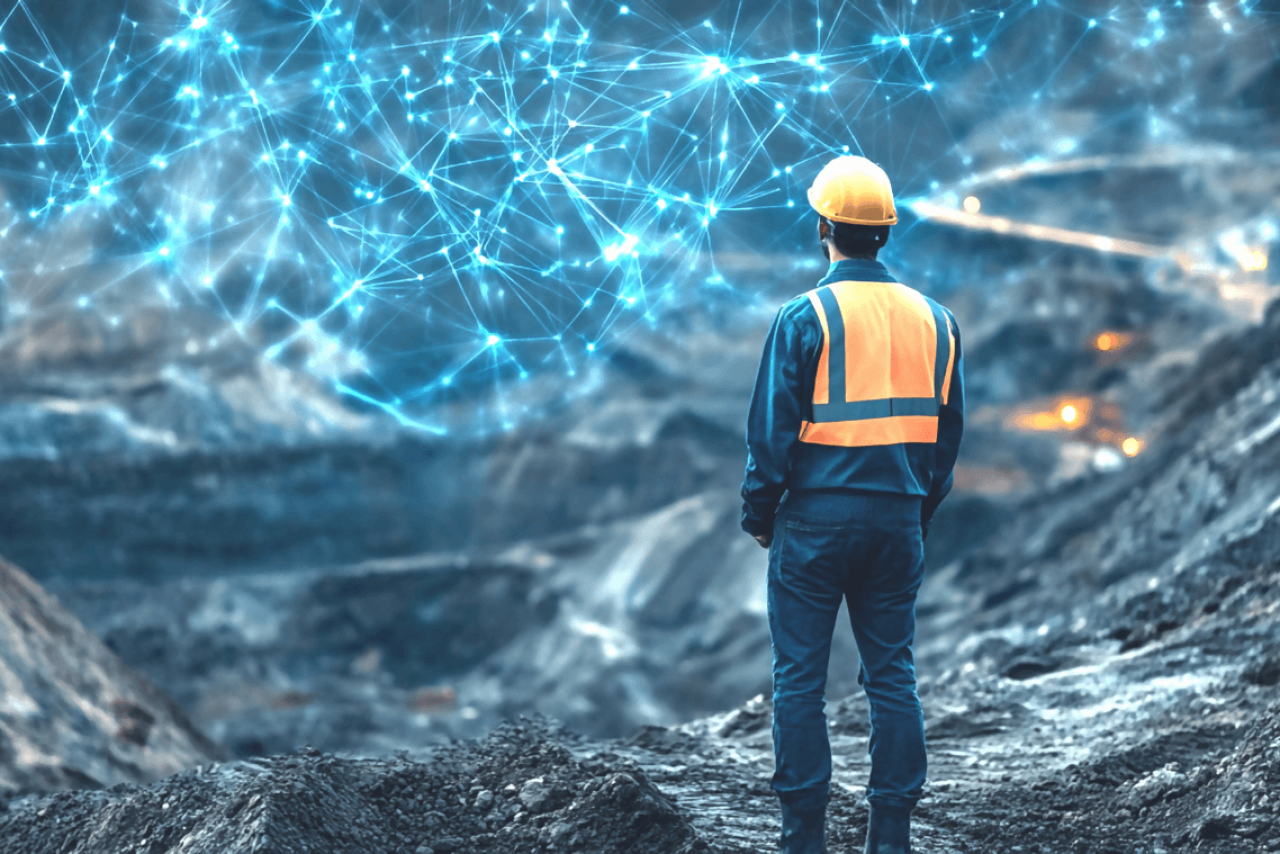
How? By combining multiple datasets and information about the Earth’s crust (soil samples, satellite imagery, academic publications, geological reports both recent and historical), vast databases are created. Machine learning algorithms can then analyse them to identify recurring patterns and characteristics of locations where rare metals have previously been found, and thus detect new promising areas in previously unexplored regions.
Early field tests suggest that this system may increase the success rate by up to 25 times, reducing uncertainty and providing clearer risk assessments for investors.
Forecasting demand for rare metals in the coming years
Demand for rare metals is rapidly increasing due to the growth of clean energy technologies. According to the International Energy Agency (IEA), based on the goals of the Paris Agreement to combat climate change, demand is expected to rise significantly. By 2050, demand for certain materials could double, triple, quadruple, or even more.
Global context and Europe
Rare metals originate mainly outside Europe: extraction and processing are concentrated in a handful of countries. China, Australia, and South Africa hold a form of monopoly, resulting in Europe’s dependence.
This dependence raises concerns regarding prices, supply security, and environmental impact. The European Union has responded with the “European Critical Raw Materials Act (CRMA)”, adopted in 2024, which aims to:
- Reduce dependence on third countries
- Increase domestic production capacity by boosting extraction, refining, and recycling of strategic raw materials
- Diversify supply sources
Without secure access to these materials, the European Union risks losing competitiveness. However, there are additional factors to consider for the revival of the “Old Continent”. For AI systems to function properly, high-quality and precise geological data is essential to train algorithms effectively.
Fragmented or inconsistent spatial and temporal data may lead to inaccurate results, false signals, or entirely incorrect predictions.
Global balances and negotiations
In early May 2025, the governments of Ukraine and the United States signed an agreement regarding the use of mineral and energy resources within Ukraine’s territory.
This demonstrates how strategic access to mineral resources is a key factor not only in markets but also in international geopolitical balances.
AI also for reducing environmental impact
In addition to the advantages mentioned above, artificial intelligence can play a leading role in reducing the environmental impact of rare metal exploration: through data processing and mapping, it can avoid blind exploration and unnecessary drilling.
Moreover, this technology should be trained both to minimise the environmental consequences of extraction by evaluating data on its impact, and to foster greater ecological awareness, which is increasingly important today.