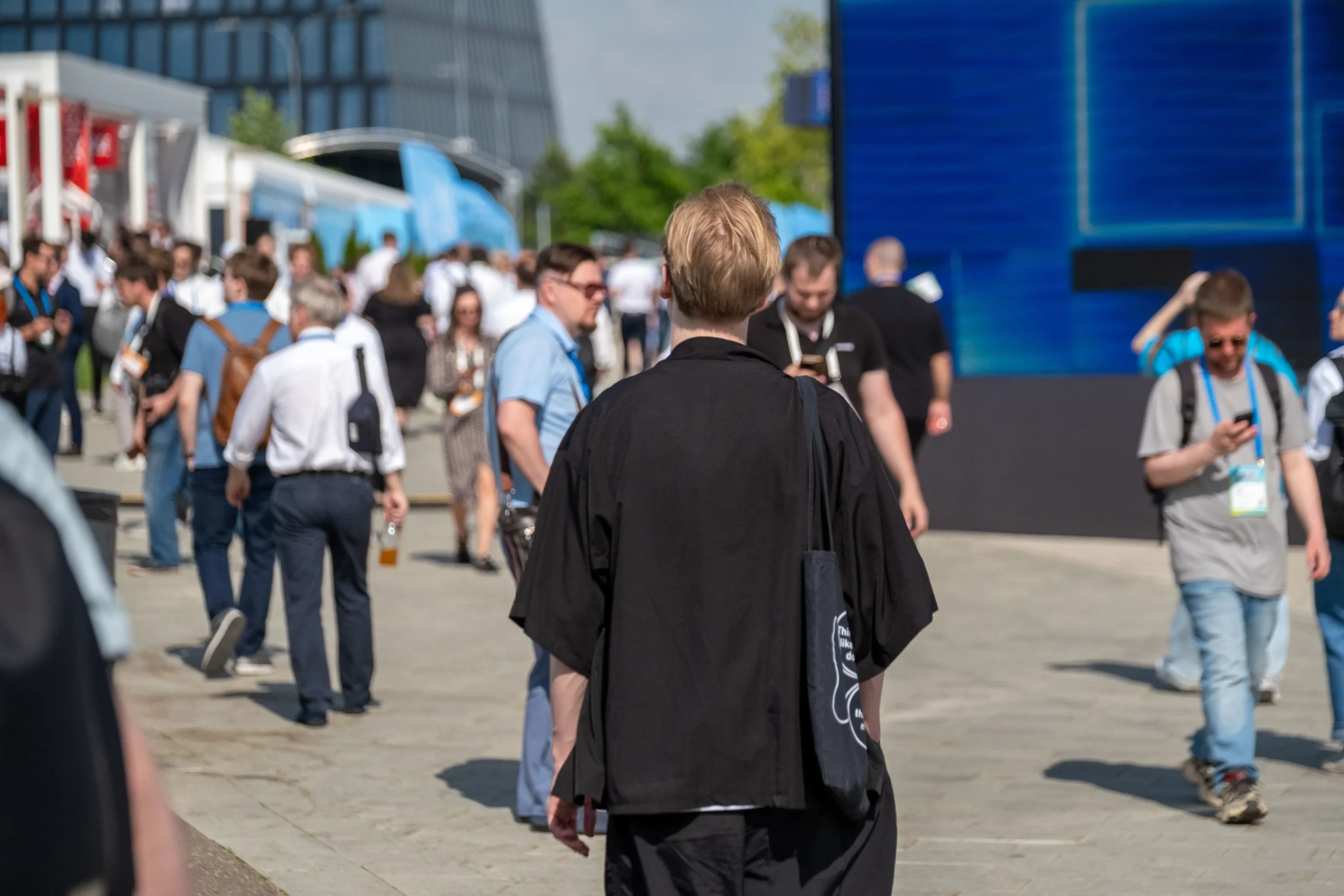
A typical day at the exhibition centre: the pace, the encounters and the relationship between business and the city.
Morning: Arrivals, Crowds and First Connections
The day starts early, long before the exhibition halls officially open. In Hanover, during major events organised by Hannover Fairs, the morning begins at a very different pace. Hotels empty quickly, and shuttle buses begin their precisely timed journeys. Railway stations and underground stations fill with people wearing badges around their necks, many of whom have already planned every detail of their day.
Entering the trade fair marks the beginning of the real immersion. The flow of visitors is organised but intense: thousands of people make their way through the various entrances, each heading towards a specific hall. This is where the international scale of the event becomes immediately apparent: different languages, different styles and different objectives all converge in the same space.
Once inside, the temporary city comes to life. The corridors fill with activity, stands light up, and the first handshakes mark the beginning of new relationships. Morning is the most strategic part of the day: meetings are scheduled, visits are carefully targeted, and time is organised with clockwork precision.
Here, networking is no accident. It is built, prepared and often arranged weeks in advance, following an extensive period of initial contact. Yet it can also happen spontaneously: all it takes is stopping at a stand, observing a technology or asking a question. A few minutes are enough to start a conversation that could turn into an opportunity. That is what trade fairs are all about, isn’t it?
Afternoon: Meetings, Ideas and Intensity
As the hours pass, the pace changes but never slows down. The afternoon is a time of intensity: more people, more meetings, more stimulation. The exhibition halls reach peak visitor numbers, and the energy becomes almost tangible.
Conferences, presentations and keynote speeches shape the day. They offer opportunities not only to gather information, but also to assess market direction, understand where companies are heading and identify emerging trends. From this perspective, a trade fair is more than just an exhibition. It is a snapshot of the present.
From one stand to the next, time seems to shrink.
Meetings follow one another at an often relentless pace. Visitors move quickly, optimise their routes and look for shortcuts between the different halls. And yet, despite the intensity, there is still plenty of room for unexpected e