


From piping design to HVAC systems, the solutions that can improve acoustic comfort in buildings.
When it comes to sound insulation, attention often focuses on the building envelope. Walls, floors and windows are essential elements, but they are not the only factors affecting the acoustic comfort perceived indoors. Building services can also become a significant source of noise if they are not designed according to appropriate acoustic criteria. Vibrations, turbulence and sound transmission through structures can compromise the quality of indoor spaces, particularly in residential, hospitality, educational and workplace buildings.
Noise often starts with design details
The main issues concern plumbing systems and systems dedicated to air conditioning, ventilation and air treatment. In piping systems, noise does not depend solely on water flow, but also on vibrations transmitted to the building structure when supports are rigid or when pipes pass through walls and floors without adequate decoupling. For this reason, the design stage should include anti-vibration pipe clamps, sound-insulating sleeves and properly isolated penetrations, as well as layouts that minimise changes in direction and turbulence.
HVAC: efficiency and low noise should go hand in hand
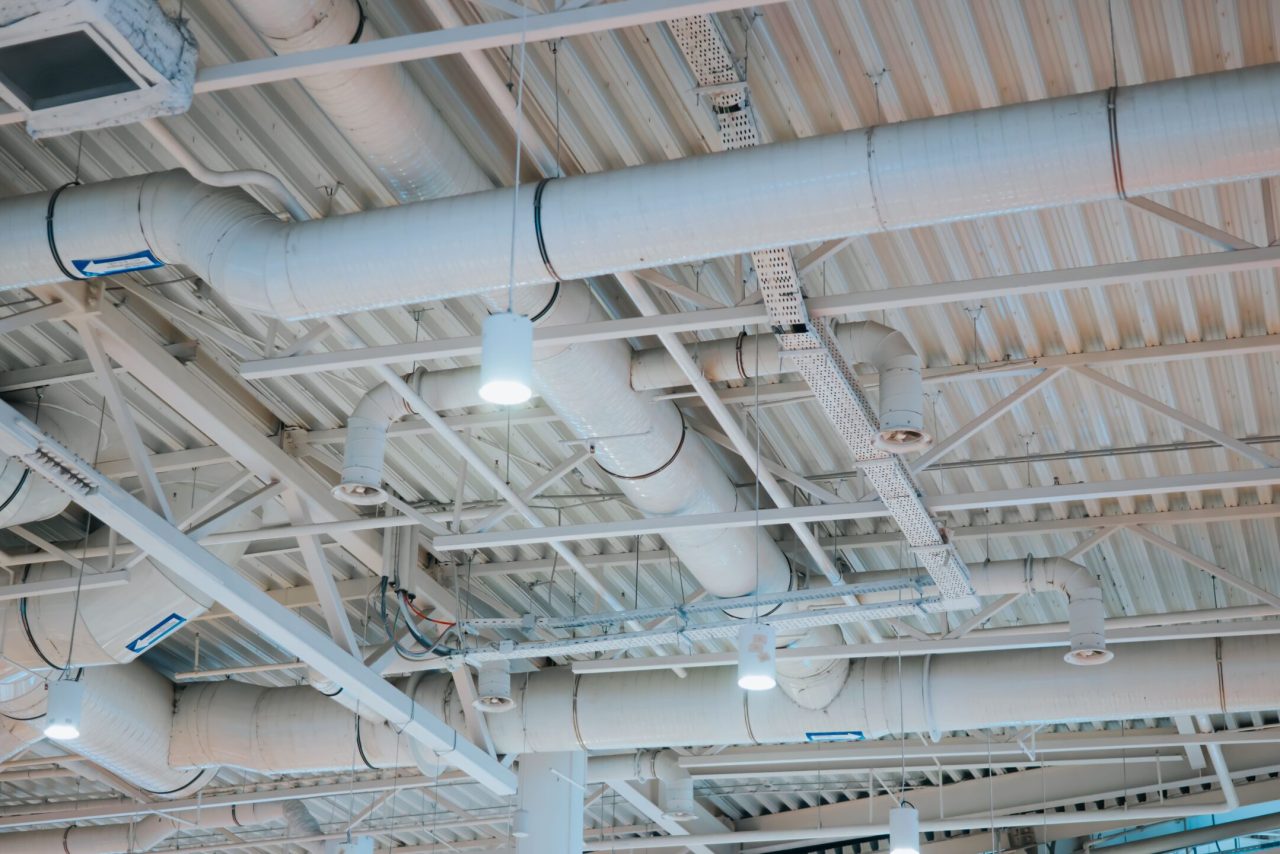
HVAC systems can also have a significant impact on acoustic comfort. Fans, compressors, pumps and air movement inside ductwork generate sound emissions which, if not properly controlled, can spread into occupied spaces. Careful design involves correct sizing of air distribution networks, controlled air velocities, sound-absorbing duct linings, flexible connections and anti-vibration supports for equipment.
According to the guidance provided by the international standard ISO 22955, which addresses the acoustic quality of open-plan environments, noise generated by building services is one of the factors that can significantly affect perceived comfort and occupants’ ability to concentrate. Acoustic design of building services should therefore not be considered an accessory measure, but an essential component of building quality.